

Sri Suphan Temple: ‘Have you ever seen a silver ubosot before?’
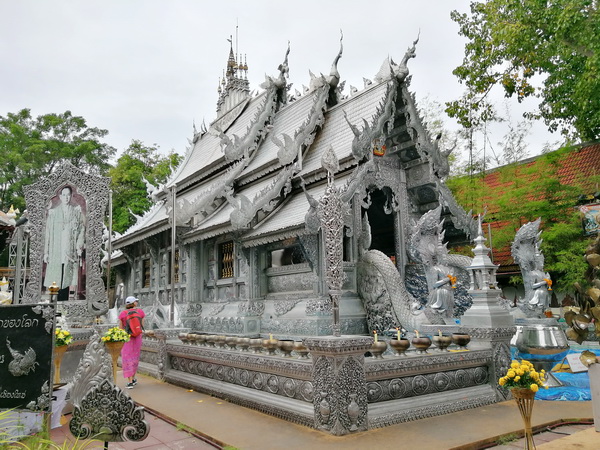
Speaking of the most outstanding tourist attractions in Chiang Mai, surely we can never skip this one, ‘Sri Suphan Temple’, as the temple has something really unique and valuable.
🌿 A first impression that stays with you
Sri Suphan temple isn’t the kind of temple you visit in five minutes and forget. The moment you step into its grounds, you feel an unusual mix of stillness and creative energy—like a sacred place that also happens to be a working studio. It sits along Wua Lai Road, south of Chiang Mai’s Old City, in a neighborhood long associated with metal craftsmanship. That setting matters. Here, the temple doesn’t feel isolated from daily life; it feels like the spiritual center of a community that still makes things by hand. The atmosphere is calm, but your eyes never rest—because every surface, corner, and panel seems to carry a story.
People call it “the Silver Temple” because the main ordination hall gleams with silver-toned relief work. But reducing Wat Sri Suphan to a nickname doesn’t do it justice. This is a place where Chiang Mai’s identity—Lanna heritage, Buddhist devotion, artisan pride, and neighborhood culture—has been shaped into architecture you can walk around, study, and feel.
🏛️ Historical roots: a temple shaped by centuries
Sri Suphan temple is regarded as one of Chiang Mai’s older temples, associated with the era when the city’s Lanna kingdom influence was strong and temple-building was both a spiritual act and a statement of cultural confidence. Over centuries, the temple has continued to serve local religious life while also adapting to new realities—especially the need to preserve traditional crafts in a modern world. That long timeline is part of what makes the place feel “real”: it isn’t a staged attraction, but a community temple with an evolving identity.
Instead of presenting history only through plaques and dates, Sri Suphan temple “shows” its story through what you see on the buildings—traditional forms alongside newer artistic interpretations, sacred symbolism beside community pride. It’s a temple that has learned how to remain faithful to tradition while speaking in a contemporary visual language.
🥈 The Silver Ubosot: why this building is globally unique
The crown jewel is the silver-covered ordination hall (ubosot). In scale and shape, it follows temple traditions—rooflines, proportions, ceremonial presence—but the surface is where it becomes extraordinary. The hall is clad in intricately worked metal panels, designed and assembled with the same patient skills used in fine silverware—repoussé, chasing, engraving, and relief work. Standing in front of it feels less like “looking at a building” and more like “reading a carved manuscript.”
Walk slowly around the ubosot and you’ll notice how its character shifts. In bright sun, the panels sparkle and the details become razor sharp. In softer light, the relief looks smoother, more sculptural, almost like flowing fabric. The building changes as the day changes, and that’s why it’s worth revisiting at different times if you can. Many visitors take one photo and move on—but the real magic is in lingering long enough to notice that the hall is packed with layered motifs: Buddhist narratives, protective symbols, moral reminders, and ornamental patterns that echo Lanna tradition while also feeling surprisingly modern in places.
This isn’t decoration for decoration’s sake. The silver artistry is an identity statement: the temple reflects the heritage of the Wua Lai community, a neighborhood known for metalwork and silver craftsmanship. The ubosot becomes a sacred monument built from local skill—faith expressed through craft.
🙏 The sacred interior: the principal Buddha image and a powerful detail
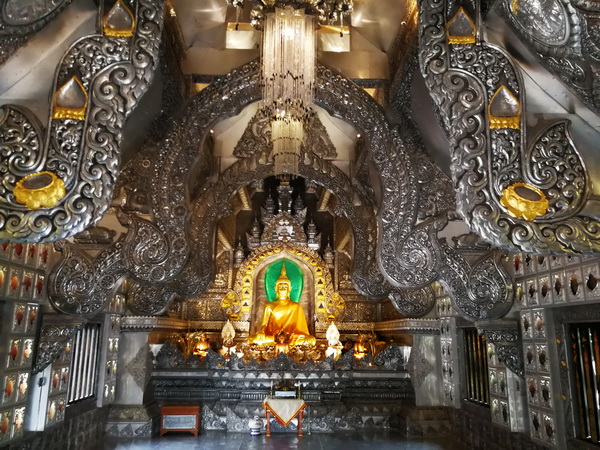
Inside the ordination hall is the principal Buddha statue, revered locally and often remembered for a striking historical detail: visible damage marks on the statue that are associated with a period of conflict. Whether you come as a believer or as a cultural traveler, this detail changes your emotional relationship to the temple. It’s not just an artistic marvel—it’s a site where history has physically touched sacred space. The statue becomes a reminder that temples aren’t just “beautiful places”; they are places where real communities have lived through hardship, continuity, and renewal.
⚠️ Cultural etiquette: understanding the women-only restriction respectfully
Wat Sri Suphan is also known for a traditional restriction: women are not permitted to enter the ubosot. For some travelers, this can be surprising or challenging, and it’s natural to have feelings about it. The most respectful approach is to treat it as a living cultural boundary within a community’s religious practice rather than as a tourist rule. The temple remains fully meaningful without entry because the exterior artistry is exceptionally rich, and the rest of the temple grounds offer plenty of space for contemplation, photography, and learning.
If you’re visiting with friends or family, plan your experience around shared moments that don’t require entering the ubosot—circle the building together, discuss the motifs, take time with the learning areas, and absorb the calm of the compound. Sri Suphan temple has enough substance that the experience doesn’t hinge on crossing one threshold.
🏯 Beyond the Silver Hall: the red vihara and its vivid murals
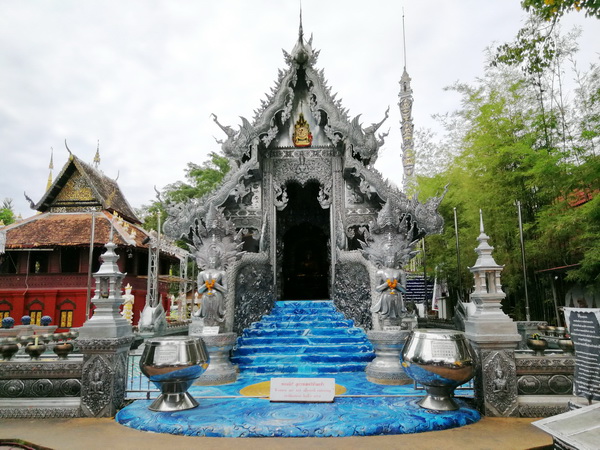
While the silver ubosot is the star, the temple’s red vihara (assembly/prayer hall) adds warmth and narrative depth. Its murals create a different kind of beauty—less reflective, more storytelling—often featuring themes that visitors love to search for and interpret, including zodiac-inspired imagery. The vihara provides contrast: where the ubosot feels like sacred metal poetry, the vihara feels like a traditional temple heart—color, community prayer energy, and a more familiar sense of Lanna interior atmosphere.
That pairing is important. It prevents the temple from being “only a silver building” and makes it a complete cultural site: one part dazzling innovation, one part classic spiritual space.
🛕 The Lanna chedi: sacred geometry in northern Thai form
Within the grounds, you’ll also find a Lanna-style chedi (stupa) that strengthens the sense of old Chiang Mai tradition. Its form follows symbolic temple geometry—often interpreted through shapes such as the bell-like body and lotus-inspired elements, each reflecting ideas of purity, enlightenment, and the layered cosmos in Buddhist architecture. Even if you don’t know the technical terms, you can feel the intention: a structure meant to anchor the site spiritually, a quiet counterbalance to the ubosot’s visual intensity.
🎓 The “living museum” side: learning centers, training spaces, and artisan demonstrations
This is where Sri Suphan temple becomes more than a sightseeing stop. Around the temple, learning-focused spaces and training areas are connected to preserving metal craft traditions—especially silverwork and ornamental design. What you’ll find is not a single “museum room,” but a learning ecosystem: places where you can observe artisans working, see tools and techniques, and understand how the temple’s own artistry was made.
What can you actually learn here? Visitors commonly encounter demonstrations and training activities focused on the fundamentals behind the temple’s signature look:
The first is repoussé-style relief forming—how artists create raised patterns by shaping metal from the reverse side, then refine the front with careful chasing. The second is engraving and texturing—how lines, scales, floral motifs, and geometric borders are built from repeated hand motions until a pattern becomes visually alive. The third is finishing—polishing and surface control, which determines whether the metal reads as mirror-bright, softly satin, or intentionally aged. Even if you only watch, you leave with a deeper respect for the temple’s panels, because you start to understand the labor behind every centimeter.
These learning spaces also act as cultural preservation. Instead of letting traditional craft fade into souvenir commerce, the temple supports skill transfer and gives craftsmanship a dignified setting—connected to community pride and religious meaning.
🛠️ Workshops: what you can make, who it’s for, and how it typically works
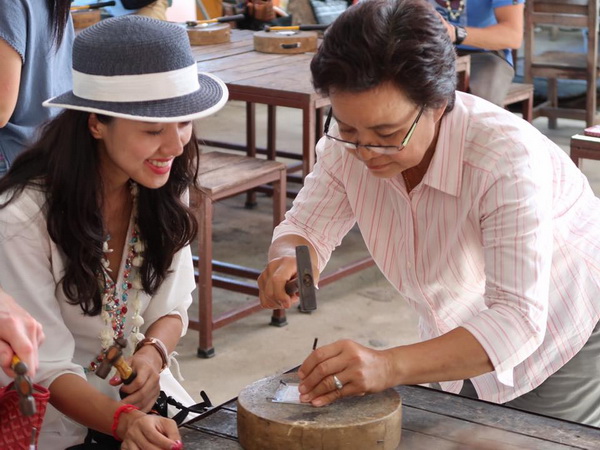
If you want a hands-on experience, workshops are the highlight. The most common format is a beginner-friendly session where you create a small item under guidance. Rather than attempting a complex piece of jewelry, you’ll typically work on something that can be completed in a short time—like a small engraved plaque, a simple ornamental piece, or a keepsake panel with traditional motifs. The point is not to become a silversmith in one afternoon, but to experience the technique, understand the craft logic, and bring home something meaningful that you participated in making.
Workshops generally suit most ages because the instruction is step-by-step and the tasks are simplified. If you’re traveling as a couple or family, it’s a rare activity that feels culturally authentic, creative, and memorable without requiring athletic effort or specialized knowledge.
As for practicalities, availability depends on artisan schedules and temple activities, so reserving ahead is the smartest plan—especially if you’re visiting on a weekend. Pricing can vary by session type, duration, and materials, but introductory participation is often affordable compared with other cultural workshops in tourist areas. If your goal is depth, this is one of the best “value-per-memory” experiences in Chiang Mai.
💆 A surprising detail: traditional Thai massage inside the temple environment
Wat Sri Suphan also offers something many travelers don’t expect in a temple visit: a pavilion where visitors can enjoy traditional Thai massage, including foot massage. This isn’t just a “service add-on”—it reinforces the temple’s role as a community space where well-being, calm, and hospitality are part of the visitor experience. After walking the Old City or browsing the market, it can feel like a gentle reset before you continue exploring.
🏛️ A small museum with big meaning
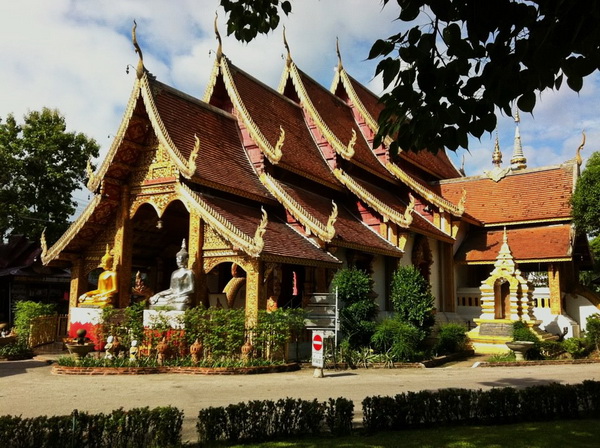
There is also a compact museum-like space displaying community items—ornaments, utensils, and small crafted objects that reflect local intellect and artistry. It may not be large, but it adds an important layer: it shows that craftsmanship isn’t only about grand temple decoration. It’s also about everyday life, family tradition, and the pride of making useful objects beautifully. If the ubosot is the masterpiece, the museum is the human-scale context that explains where such mastery comes from.
🌙 The Wua Lai connection: the temple and the Saturday Walking Street
Wat Sri Suphan’s location is a huge part of its charm. Wua Lai Road becomes one of Chiang Mai’s most loved Saturday evening walking streets, filled with food stalls, craft booths, music, and local energy. Visiting the temple on a Saturday creates a special “two-worlds” experience: you begin in sacred quiet, then step out into a lively cultural street scene. The temple feels like the spiritual anchor of the neighborhood—especially when the surrounding lights reflect on metal surfaces and the whole area feels more cinematic.
For many travelers, the best plan is simple: visit the temple before the crowd peaks, enjoy the silver details in calmer conditions, then transition into the market when you’re ready for snacks, shopping, and street-life atmosphere.
🕰️ When to visit: choosing the best light and the best mood
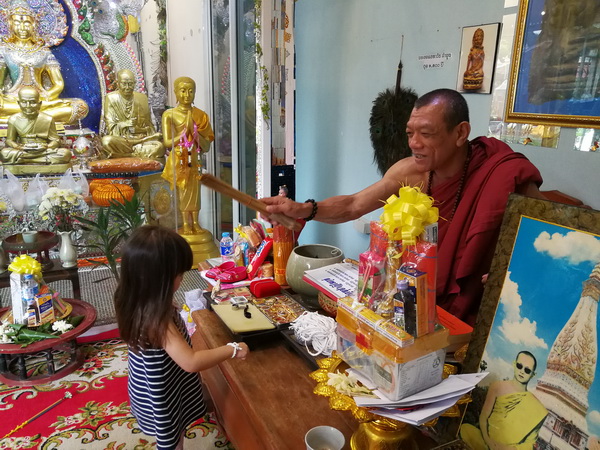
If you want clear photos and a peaceful feel, morning is ideal. If you want warmth and dramatic highlights on the silver surfaces, late afternoon often looks stunning. If you want culture and atmosphere, Saturday evening is unbeatable because you can pair the temple visit with the walking street. The best advice is to give yourself time. Wat Sri Suphan is one of the rare temples where slowing down dramatically improves your experience—because the details don’t “hit” all at once. They reveal themselves.
🚗 Getting there: easy logistics and flexible transport options
The temple is located on Wualai Street, Muang County. The name Wualai Street probably sounds familiar to you, as it is the very same location of the famous ‘Wualai Saturday Walking Street’.
If you know to way to Wualai Saturday Walking Street, then traveling to Sri Suphan Temple is not going to be much different. The first way to go is to hail a red truck and tell the driver where you want to go. The travel fee can be about 30-50 Baht. That is not fixed, but depends on the driver’s consideration or if you need more comfortable, we can provide the private tour or car rental with driver with air-con vehicle and if you need more information, you can travel with the tour guide that a good choice.
Another way is to drive a car or motorcycle. You just have to follow Wualai Street. Drive for about 600 metres before you see the sign that tells you the direction of ‘Sri Suphan Temple’. Just follow that direction, to the right side. Later on, you keep going for about 50 metres and you will see the temple.
Entrance fee & opening hours : Open from 6:00 am. until 6:00 pm. The admission is free.
Note : Wheelchair user is accessible
Our services :
- Chiang Mai City Tour by TukTuk (Join in tour)
- Private Tour Chiang Mai City and Temple (Private Group)
Discover the unique silver architecture and immerse yourself in the rich cultural heritage of this enchanting temple.
Book your tour today and witness the magic of the Silver Temple!


Sri Suphan Temple Map





Leave A Comment