

Chiang Dao Cave Chiang Mai is one of the top-rated tourist attractions in Thailand.

Chiang Dao Cave: A Detailed Guide to History, Cave Chambers, Highlights, Entrance Fees, and the Temple Outside
🌿 An Introduction to Chiang Dao Cave
Chiang Dao Cave is a large limestone cave system located at the foot of Doi Luang Chiang Dao in Chiang Dao District, Chiang Mai Province, northern Thailand. It is one of the most famous caves in the region, not only because of its natural beauty, but also because of its strong connection to religion, local beliefs, and Lanna cultural history. The cave lies within the grounds of Wat Tham Chiang Dao, which is also referred to by some sources as Wat Tham Luang Chiang Dao. This makes the site much more than a geological attraction. It is a place where nature, spirituality, and heritage come together in a very memorable way.
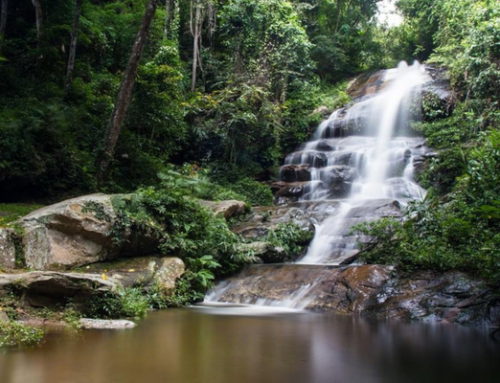
Before even entering the cave, visitors are welcomed by a peaceful setting of trees, flowing water, and temple structures. A stream of clear water emerges from the mountain and flows past the cave entrance, forming pools filled with fish. This tranquil landscape gives the entire area a cool and refreshing atmosphere. Many visitors feel that the experience of Chiang Dao Cave begins outside, long before they step into the darkness of the underground chambers.
Geologically, the cave developed within a massive limestone mountain system. The limestone in this area is believed to be around 250 to 300 million years old, dating back to the Permian period. Over an immense span of time, water dissolved and shaped the rock, creating chambers, tunnels, underground waterways, and spectacular cave formations. Because of this, Chiang Dao Cave is not just visually impressive, but also highly significant from a geological point of view.
📜 The History of Chiang Dao Cave and Wat Tham Chiang Dao
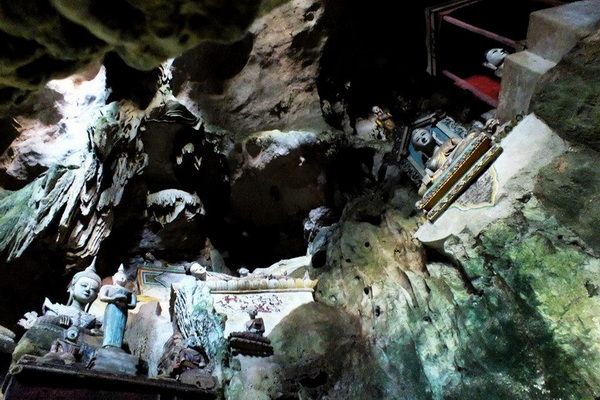
Chiang Dao Cave has long been associated with sacred traditions, and the temple outside the cave has an important historical background. Wat Tham Chiang Dao was established in 1767. Historical records mention that its early development involved Phra Khruba Prathammapanya and Pho Saen Pi. Later, in 1887, Phraya Inta Phiban contributed to the site by building stairways leading up to the cave entrance, together with additional religious structures and temple facilities. These developments helped transform the site into an important religious and cultural destination in northern Thailand.
Further additions were made in 1913, when a hermit named Khantha, or U Khantha, came to the cave and created several Buddha images. Then in 1934, the revered northern monk Kruba Sriwichai, one of the most respected spiritual figures in Lanna history, came to restore and improve parts of the temple complex. His involvement added even greater spiritual importance to the site. The temple later received royal recognition as an established monastery in 1971.
The cave is also deeply connected to local legends, especially the story of Chao Luang Kham Daeng, a guardian spirit believed to protect Doi Luang Chiang Dao and the surrounding sacred landscape. Because of this belief, visiting Chiang Dao Cave is not simply a sightseeing activity. For many people, it is also a pilgrimage, a cultural encounter, and a spiritual experience. Visitors often combine cave exploration with paying respect to sacred images and shrines around the temple grounds.
🪨 The Overall Structure of the Cave
Chiang Dao Cave is known for having five main chambers, or major sections, that connect with one another in different ways. These are Tham Phra Non Chamber, approximately 351.46 meters long; Tham Nam Chamber, approximately 298.34 meters long; Tham Ma Chamber, approximately 86.25 meters long; Tham Laplae Chamber, approximately 273.19 meters long; and Tham Kaeo Chamber, approximately 100.46 meters long. Tham Phra Non connects to Tham Nam, while Tham Ma connects to Tham Laplae. In addition to these main sections, the cave also contains smaller notable areas with evocative names such as the Skylight Shaft, the Hall of the Angels, and the Stone Rice Field Room.
When discussing the total length of Chiang Dao Cave, it is important to distinguish between the tourist routes and the entire cave system. The commonly visited passages are shorter and more manageable. For example, the route through Tham Phra Non is often described as being around 360 meters, while the route through Tham Kaeo and Tham Nam is around 734 meters, and the deeper route through the darker cave sections such as Tham Ma is around 735 meters. These are the parts most visitors experience.
However, scientific cave surveys suggest that the full cave system is far larger than the tourist sections alone. Research indicates that the interconnected passages of Chiang Dao Cave extend for more than 5,300 meters, making it one of the longest cave systems in Thailand. Some cave survey databases record an even greater total length, at over 5,600 meters. This means that the cave is a major underground system stretching several kilometers, even though only selected areas are open to the public for safety and conservation reasons.

💎 Cave Formations: Stalactites, Stalagmites, Columns, and More
One of the most fascinating features of Chiang Dao Cave is the wide variety of limestone formations found inside. The cave contains stalactites hanging from the ceiling, stalagmites rising from the floor, columns formed where the two meet, and delicate soda straws, which are slender tubular formations created by mineral-rich dripping water. Flowstone and other calcite deposits can also be seen throughout the cave. These formations were created over thousands and even millions of years by the gradual deposition of minerals carried in water.
What makes Chiang Dao Cave especially memorable is that many formations have been given poetic or imaginative names based on their appearance. Visitors may hear about formations known as the Angel’s Lamp, the Blooming Lotus, the Giant Hand, or the Layered Lotus Blossom. In some areas, especially those associated with Tham Kaeo, the rocks shimmer when light falls on them, creating a sparkling effect that resembles crystal or glass. This visual quality is one reason why some passages are associated with the word “kaeo,” meaning “crystal” or “glass.”
From a geological perspective, the cave also preserves evidence of a long and dynamic natural history. Inside, one can observe old floor levels, traces of past water flow, collapse zones, ceiling openings, sediment deposits, and broken rock fragments of various sizes. These features show that the cave has not remained unchanged. Instead, it has been shaped continuously by underground water, erosion, mineral deposition, and structural shifts. This combination of beauty and scientific interest makes Chiang Dao Cave appealing not only to travelers but also to people interested in earth science and karst landscapes.
🔦 The Main Highlights Inside Chiang Dao Cave
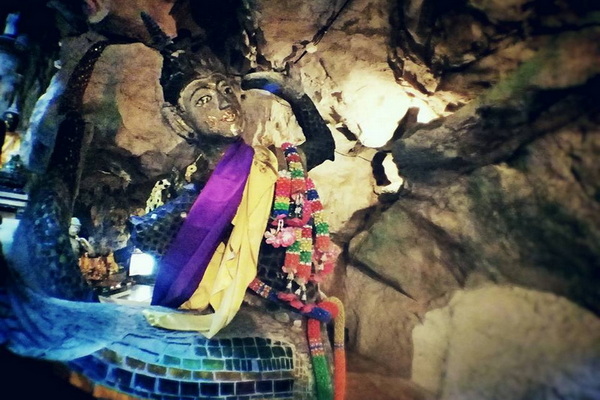
The most well-known section of the cave is Tham Phra Non, or the Reclining Buddha Chamber. This area is easier to access than the deeper sections and is fitted with electric lighting, making it suitable for general visitors. Inside, there is an ancient reclining Buddha image, commonly referred to as Phra Kassapa, with a length of about two meters. The atmosphere here is especially striking because the sacred image is surrounded by the natural shapes of the cave, giving visitors the feeling of stepping into an underground sanctuary rather than simply a rock chamber.
Another major highlight is the deeper route that requires a local guide carrying a lantern. These darker sections include areas such as Tham Kaeo, Tham Nam, Tham Ma, and other parts often collectively described as the “dark cave.” This part of the experience feels very different from the illuminated areas. Without fixed electric lighting, the lantern reveals the cave slowly, casting warm light over stalactites, stalagmites, narrow passages, shadowy walls, and pools of water. The result is a mysterious and adventurous atmosphere that allows visitors to feel the cave’s raw natural character more vividly.
A further highlight is the beautiful stream that flows from the cave all year round. This water adds life to the cave environment and creates a sense of freshness that is unusual even among famous cave attractions. The combination of underground formations, sacred objects, cool air, and flowing water makes Chiang Dao Cave feel alive in a way that many caves do not. Visitors often spend time near the entrance enjoying the fish-filled pools, taking photographs, and appreciating the calm surroundings before or after their underground walk.

🛕 The Temple Outside the Cave
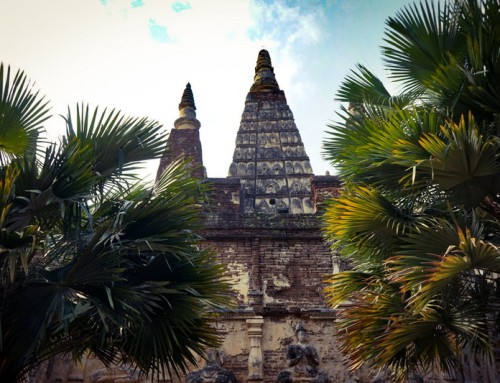
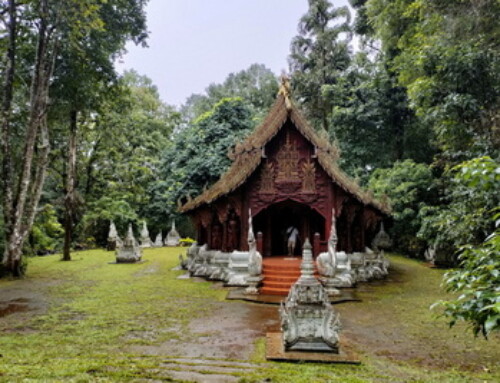
The temple located directly outside and around the cave is called Wat Tham Chiang Dao. In some cases, it is also referred to as Wat Tham Luang Chiang Dao, and locally some people may call it Wat Ban Tham. This temple is not just an adjacent structure. It is the spiritual center of the entire site, tying together the cave, the stream, the sacred statues, and the surrounding natural environment into one unified place of worship and tourism.
The relationship between the temple and the cave is one of the reasons why Chiang Dao stands out from other natural attractions. Visitors do not simply arrive at a cave entrance. Instead, they enter a temple environment first, encounter shrines and religious architecture, hear local legends, and then continue into the mountain itself. This transition from temple grounds to underground chambers gives the whole visit a powerful sense of depth and meaning.
🎟️ Entrance Fees, Lantern Fees, and Cave Access
Entrance fees at Chiang Dao Cave can vary slightly depending on the source and the time of visit, so it is wise to confirm prices upon arrival. In general, many local sources state that Thai visitors pay around 20 THB per person as an entrance or temple maintenance fee. For the deeper sections of the cave, which are not fully lit, visitors are required to hire a local guide with a lantern. The fee for this service is often given as around 100 to 200 THB per group, although many recent references suggest preparing around 200 THB per group for the deeper route. Some English-language travel information also states that foreign visitors may pay around 40 THB for the main entrance area, with the dark-cave guide fee remaining approximately 200 THB.
The deeper sections are generally not meant to be entered alone. The cave can be dark, slippery, humid, and physically more complex than it first appears. In this context, the local guide does much more than simply lead the way. Guides help ensure safety, illuminate points of interest, explain legends and traditional beliefs, and identify remarkable formations that visitors might otherwise miss. Because of that, the lantern-guided route is usually considered one of the best parts of the Chiang Dao Cave experience.
Note : Not accessible for wheelchair user
Our services :


Chiang Dao Cave Map


Leave A Comment