

Jed Yod Temple, Chiang Mai: Sacred Legacy in Seven Spires
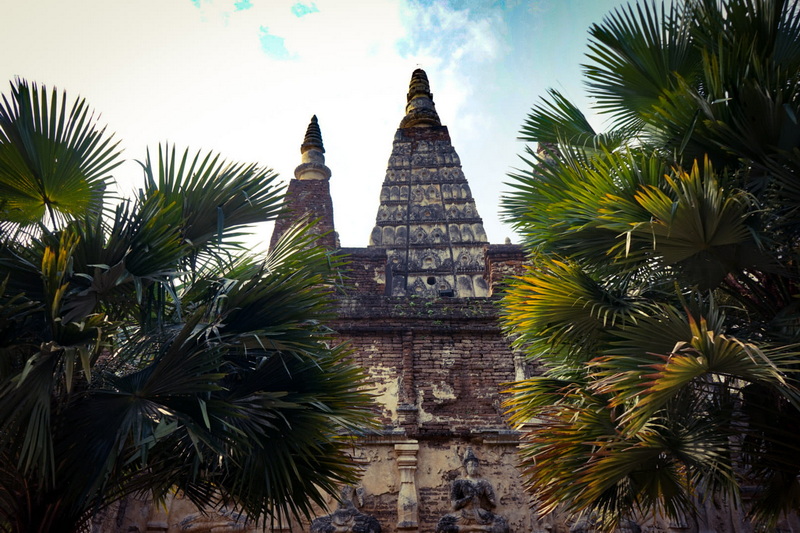
Explore Jed Yod Temple and uncover ancient Lanna architecture, sacred history, and a peaceful temple atmosphere.
🏛️ What Kind of Temple Is Wat Jed Yod, and Why Is It Important to Chiang Mai?
Jed Yod Temple, originally known as Wat Mahaphotharam, is a royal temple located in the Chang Phueak area of Mueang Chiang Mai. It stands not far from the old city and close to the Chiang Mai–Lampang Super Highway. This is not simply a beautiful temple with an unusual chedi. It is one of the most historically significant temples in the old Lanna Kingdom, with deep importance in politics, religion, and art during one of Chiang Mai’s most prosperous eras.
What makes the temple instantly recognizable is its famous seven-spired chedi, which gives the temple its current name. “Wat Jed Yod” literally means “Temple of Seven Spires.” The older name, Wat Mahaphotharam, reflects its symbolic connection to the Bodhi Tree and the sacred site of enlightenment at Bodh Gaya in India. That connection is essential to understanding the temple, because Wat Jed Yod was designed not only as a local religious site, but as a spiritual and architectural expression of a much larger Buddhist world.
Seen in a broader sense, Jed Yod Temple is especially meaningful for two kinds of visitors. First, it is ideal for those who love ancient temples and sacred architecture, because the details here are far richer than what most photographs can capture. Second, it is deeply important for those interested in Northern Thai beliefs, especially the tradition of zodiac birth-year temples. This gives Wat Jed Yod a spiritual value that goes far beyond sightseeing.
📜 The Full History of Wat Jed Yod: Origins, Royal Patronage, and Religious Importance
Jed Yod temple was built during the reign of King Tilokkarat, one of the most powerful and respected rulers of the Mangrai Dynasty. Construction is generally dated to around 1455 CE. Historical records indicate that the project was carried out under royal command, with a high-ranking official and master builder overseeing the work. From the beginning, this was not meant to be just another monastery. It was intended as a major religious center that would reflect the strength and refinement of the Lanna kingdom.
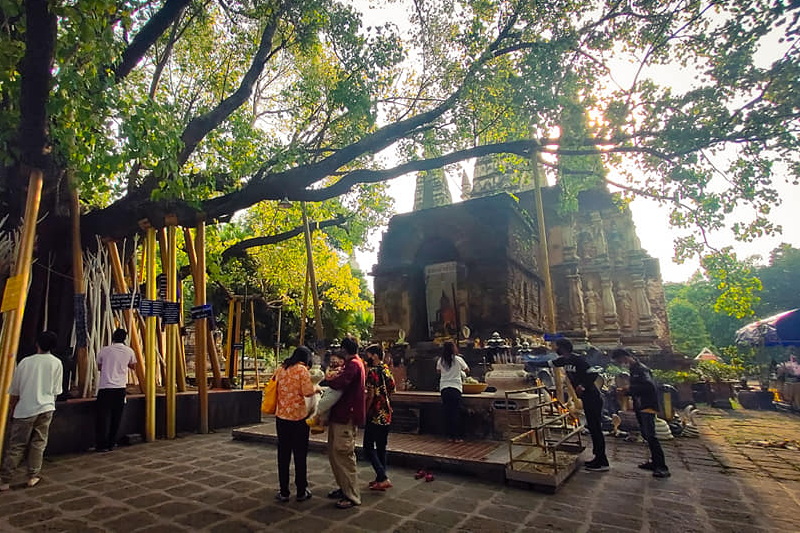
The temple’s original name, Wat Mahaphotharam, is closely linked to the sacred Bodhi Tree. King Tilokkarat was strongly influenced by Theravāda Buddhism, including traditions connected to Sri Lanka, and it is believed that a sapling of the Bodhi Tree was brought and planted at the temple grounds. Because of this, the temple was spiritually associated with Bodh Gaya, the place where the Buddha attained enlightenment. In other words, Wat Jed Yod was not only inspired by Indian sacred architecture in appearance, but also in symbolism and religious meaning.
One of the most important events in the temple’s history is that it was the site of a major Buddhist council held in 1477 CE. This council is often described as one of the great recitations or reviews of the Buddhist scriptures in Theravāda history, and it is regarded as the first such major event to be held in what is now Thailand. This gives Wat Jed Yod an extraordinary status in Thai religious history. It was not merely a place of worship, but once functioned as an intellectual and spiritual center of Buddhist learning.
Like many ancient temples in Northern Thailand, Wat Jed Yod later passed through periods of decline. During times of warfare and political instability in Lanna, the temple appears to have been neglected and may at one point have become partially abandoned. What visitors see today is therefore a combination of original Lanna-period structures and later restorations. This layered history is part of what makes the temple so compelling: it is both an ancient monument and a living place of worship shaped by many eras.
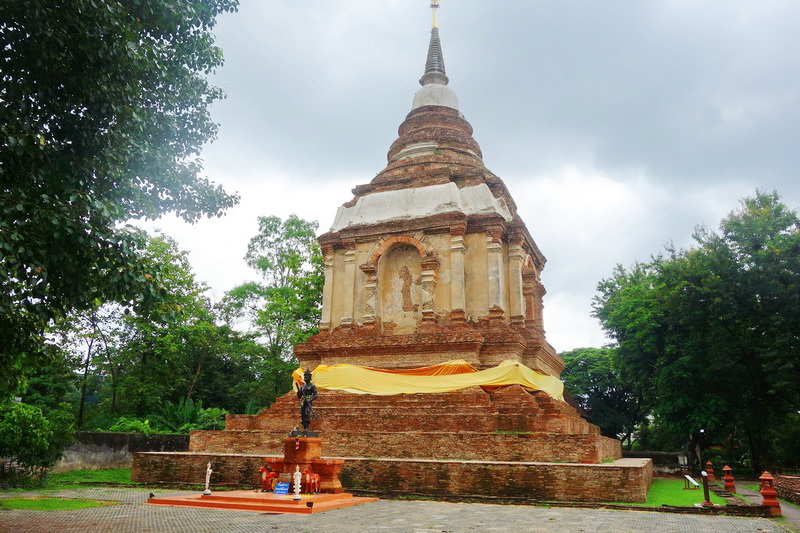
🧱 Why the Architecture of Wat Jed Yod Is So Unique
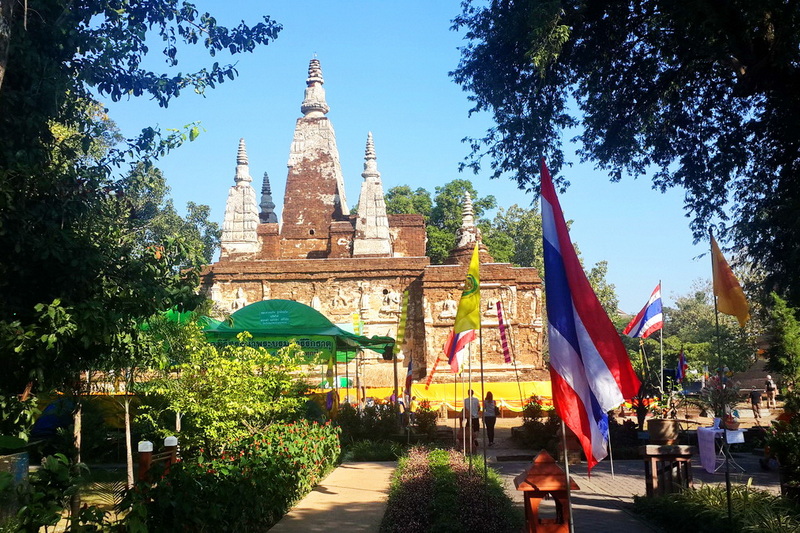
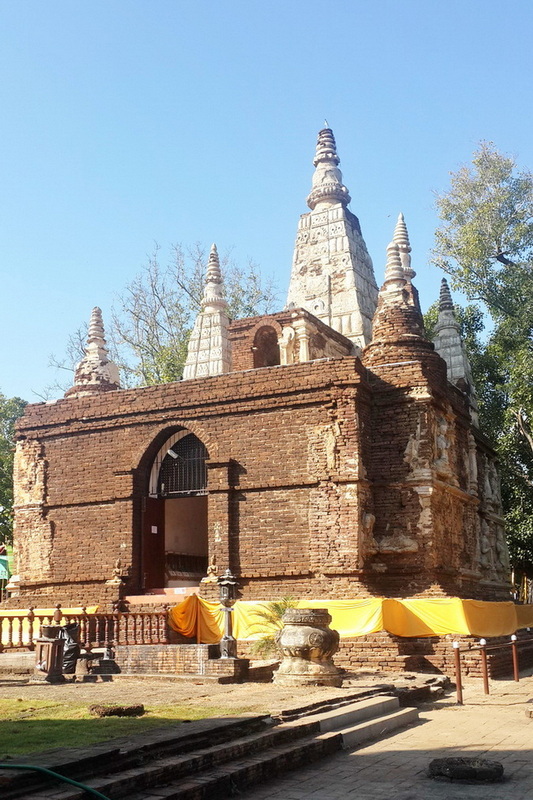
The architectural heart of Jed Yod temple is the Viharn of Seven Spires, also known as the Mahabodhi Viharn. This structure is unlike most other temples in Chiang Mai or the wider Lanna region. Its design was inspired by the Mahabodhi Temple at Bodh Gaya in India, but it was not copied exactly. Instead, Lanna artisans interpreted and adapted the concept using local materials, local craftsmanship, and their own artistic sensibilities. The result is one of the most distinctive religious structures in Northern Thailand.
The building is square in plan and crowned with seven spires, one larger central spire surrounded by six smaller ones. This arrangement is the origin of the temple’s modern name. The structure is built mainly of brick, laterite, and stucco, and it has a strong, solid, almost monumental character. Unlike the airy wooden viharns often associated with Lanna architecture, this building feels weighty, solemn, and deeply symbolic. It seems to exist somewhere between a viharn, a chedi, and a shrine-like monument, which is one reason it fascinates both visitors and scholars.
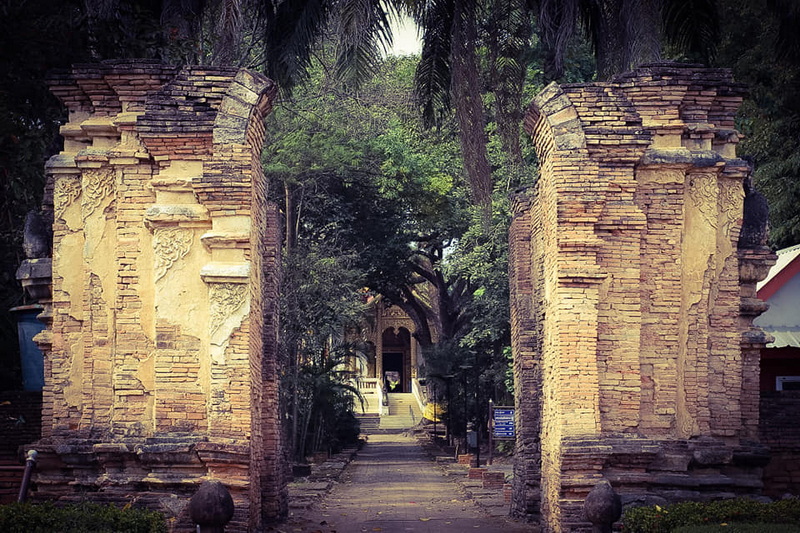
Another important feature is the temple gate, or archway, built in the traditional Lanna style. Even though parts of the original ornamentation have been lost over time, the remaining stucco work and brick construction still reveal the sophistication of the craftsmen who built it. This gateway helps frame the experience of entering the sacred space, preparing visitors for a temple that feels different from ordinary temple compounds.
Wat Jed Yod is also a place that rewards slow observation. Its beauty does not depend only on dramatic scale or bright decoration, but on texture, form, shadow, and detail. The surfaces of old brick and stucco become especially striking in the early morning or late afternoon light. Seen up close, the building reveals itself layer by layer, making it far more impressive in person than in photographs alone.
🎨 The Greatest Highlight: The Seven-Spired Chedi and the Stucco Deities
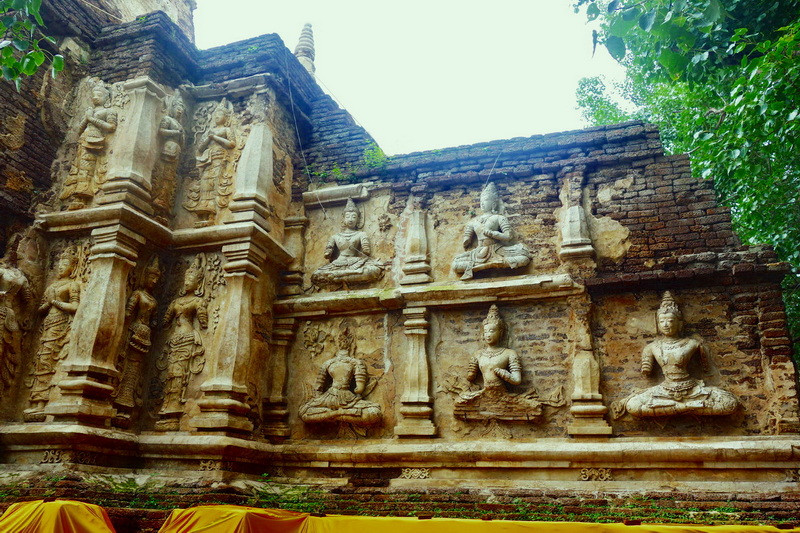
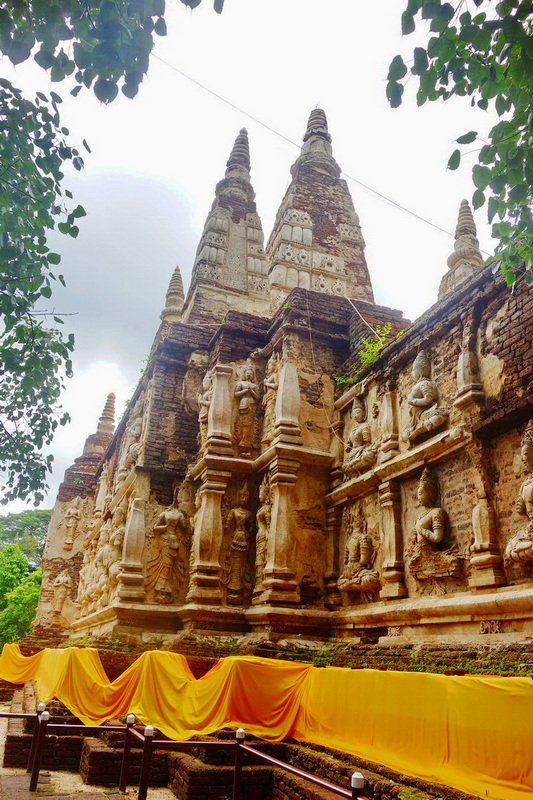
If one feature defines Jed Yod temple, it is the extraordinary stucco decoration on the walls of the Mahabodhi-style structure. These celestial figures, often referred to as stucco devas or divine beings, are among the temple’s greatest artistic treasures. They are not simply decorative motifs. They are masterpieces of Lanna religious art and among the most important surviving examples of high-level stucco craftsmanship in Northern Thailand.
The figures are arranged around the outer walls and display remarkable grace and elegance. Their postures, ornaments, garments, and facial expressions show the refined artistic language of the period. Even though some parts have eroded with time, enough remains to demonstrate the exceptional skill of the artisans who created them. The figures possess both dignity and softness, creating a sense of divine presence around the monument.
What makes these stucco devas especially fascinating is that they seem to reflect a blend of influences. Scholars have long noted possible connections to Sri Lankan and broader Buddhist artistic traditions, while the overall execution remains deeply rooted in Lanna aesthetics. This makes Wat Jed Yod not only a temple of beauty, but also a valuable record of cultural exchange across the Buddhist world.
For this reason, the best way to experience the temple is not to stand in front of it for only a quick photo. Visitors should walk slowly around the structure and observe each side carefully. The temple’s true magic lies in these details. The more time you give it, the more clearly you understand why Wat Jed Yod is considered one of Chiang Mai’s most remarkable historic temples.
🛕 Important Structures Inside the Temple, Including the Main Buddha Image and the Rear Chedi
Although the seven-spired viharn is the most famous element, the temple compound contains several other important structures that deserve attention. The grounds include an old entrance arch, additional sacred monuments, smaller shrine structures, and later buildings added during restoration periods. Wat Jed Yod is best understood not as a single monument, but as a historical complex with multiple layers of sacred architecture.
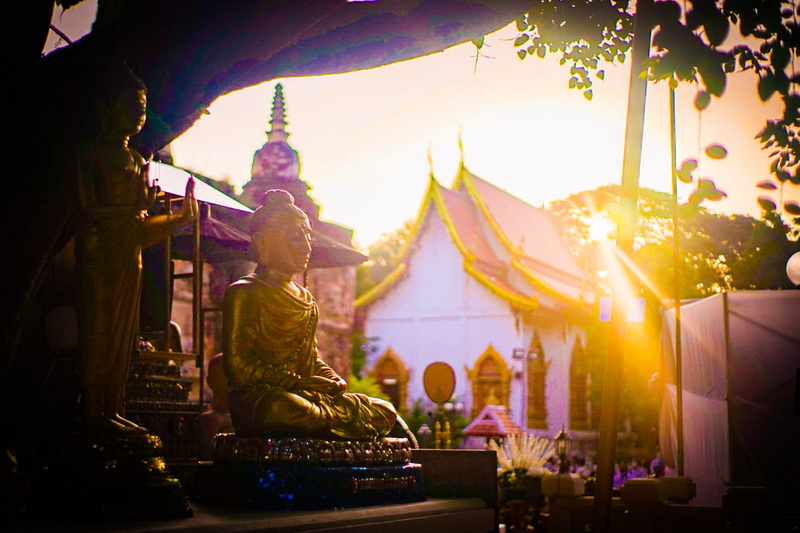
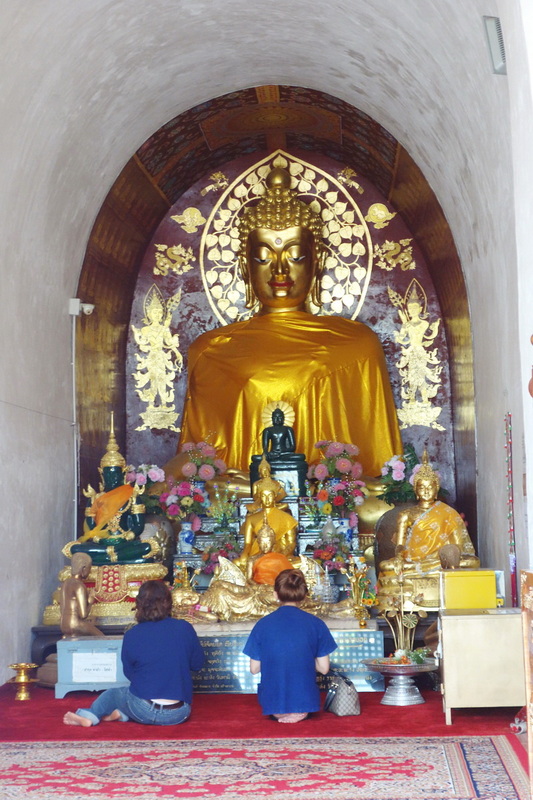
The temple’s ordination hall, or ubosot, is one of the main places where visitors go to pay respect. Inside, there is a principal Buddha image enshrined for worship, and the atmosphere is calm, solemn, and suitable for quiet prayer or meditation. Publicly available information does not always identify the principal image by a single consistent formal name, so the safest description is that the ubosot houses the main Buddha image used for worship by monks and devotees. What matters most for visitors is the peaceful feeling of the space and its continuing religious function.
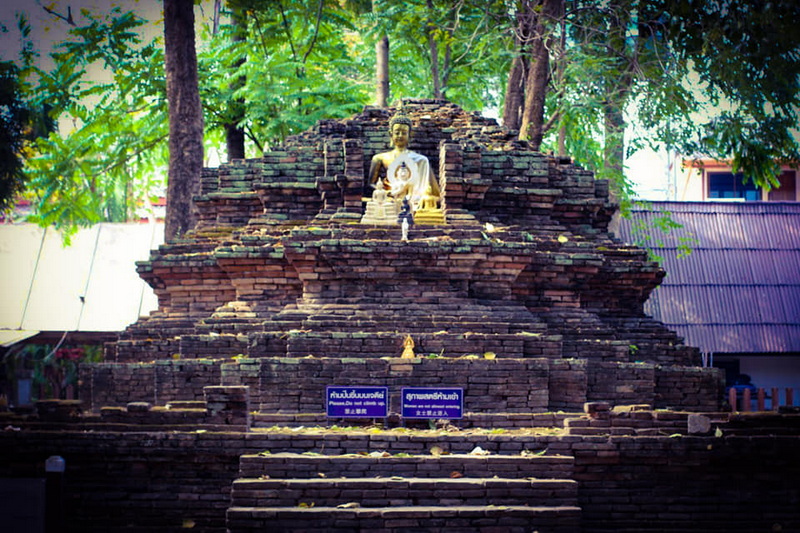
Another point of great interest is the important chedi located behind the main area of the temple. This is commonly associated with King Tilokkarat. Many local accounts describe it as a reliquary monument connected to his ashes or remains, built in honor of the king who founded the temple and supported Buddhism so strongly in Lanna. This gives the rear area of the temple special historical depth, because it ties the monument directly to royal memory and political history.
There is also a structure associated with Phra Kaen Chan Daeng, a revered image or sacred object connected to the temple’s later history. Some local narratives suggest that the original sacred image disappeared long ago and that later restoration work recreated or re-established this part of the temple. This again shows that Wat Jed Yod is not frozen in the past. It is a temple that has continued to evolve, recover, and preserve its meaning for the surrounding community.

🔮 Birth-Year Temple, Beliefs, and the Kind of Blessings People Seek
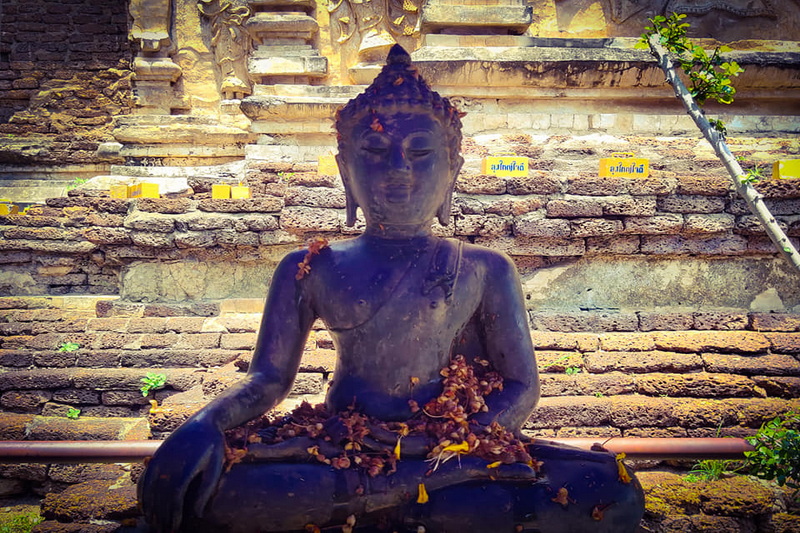
Jed Yod temple is traditionally regarded as the zodiac birth-year temple for people born in the Year of the Snake, specifically the small snake year in the Lanna zodiac system. Strictly speaking, this is not about Western astrological signs, so it is more accurate to refer to it as a birth-year temple rather than a temple for a zodiac “sign” in the Western sense. For people born in that year, the temple carries particularly strong personal and spiritual meaning.
This belief is rooted in the Northern Thai tradition of phra that pracham pi koet, or the sacred stupa associated with one’s year of birth. In Lanna belief, each person has a spiritual connection to a particular sacred relic site. Visiting that temple is believed to bring auspicious energy, strengthen merit, and reconnect the individual with a deeper spiritual foundation tied to destiny and identity.
Because of this, many visitors come to Wat Jed Yod not only to admire its art and history, but also to pray for blessings. People often seek stability in life, progress in career, removal of obstacles, inner peace, and improvement in financial fortune. For those born in the Year of the Snake, worship at Wat Jed Yod is believed to be especially beneficial, bringing protection and support to life’s path.
At the same time, in the Buddhist spirit, blessings are not seen as something gained through wish-making alone. The temple experience is most meaningful when prayer is accompanied by mindfulness, merit-making, generosity, and sincere intention. In that sense, Wat Jed Yod offers not only hope for good fortune, but also a reminder of the deeper moral and spiritual foundations of that hope.
🌿 The Atmosphere Inside the Temple and Recommended Activities
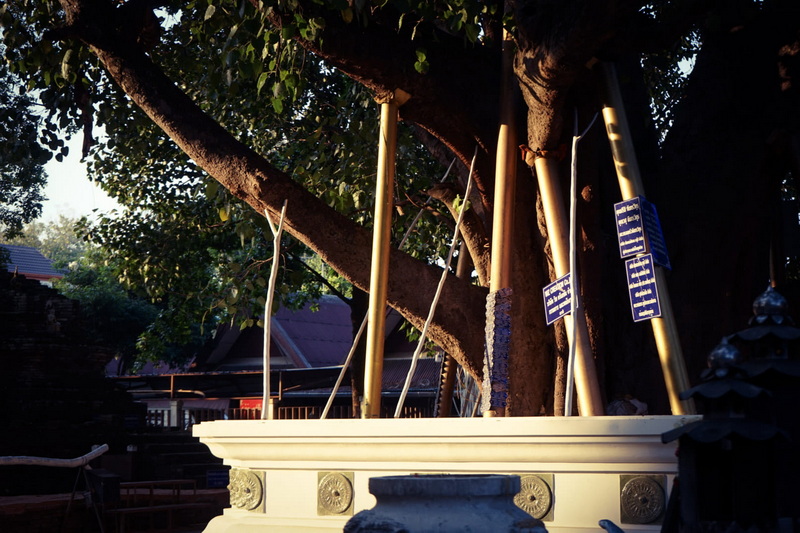
One of the most appealing aspects of Wat Ched Yod is its atmosphere. Although it lies within the city area, it feels quieter and more spacious than many well-known temples inside Chiang Mai’s old moat district. Once inside, the pace seems to slow down. Large trees, open grounds, historic brick surfaces, and the arrangement of the temple structures all create a peaceful and contemplative mood.
This is a temple best enjoyed slowly. A good visit often begins with paying respect inside the worship hall, followed by a walk around the seven-spired monument to study its stucco details. After that, visitors can continue to the rear chedi associated with King Tilokkarat and other notable structures within the compound. The more unhurried the visit, the more rewarding it becomes.
Jed Yod Temple is also excellent for photography, especially for those who enjoy architectural, spiritual, or heritage subjects. The old brick surfaces, weathered stucco, sacred geometry, and filtered natural light all create beautiful compositions. Early morning and late afternoon are especially atmospheric, when the light gives depth to the walls and highlights the carvings.
For travelers seeking something more inward, the temple is also ideal for quiet sitting, contemplation, or a short meditation break. Because it is usually calmer than some of Chiang Mai’s more crowded temple destinations, it provides space not only for observation, but for reflection. For spiritually minded visitors, making merit and paying respects to the birth-year stupa add another layer of meaning to the visit.
🚗 How to Get There, What to Wear, Opening Hours, and Entrance Fee
Jed Yod Temple is located in Chang Phueak, along the Chiang Mai–Lampang Super Highway, roughly 4 kilometers from central Chiang Mai. This makes it very easy to reach from popular city areas such as Nimman, Maya, or the Old City. Visitors can travel there by private car, taxi, red truck, or ride-hailing app without much difficulty. Because the temple is within the urban area rather than on a mountain or in the countryside, it is convenient to include in a half-day city itinerary.
As with all temples in Thailand, respectful dress is important. Visitors should wear modest clothing, with shoulders covered and bottoms of appropriate length. Clothing should not be overly revealing or excessively tight. Shoes should be removed before entering sacred indoor areas where required. Dressing respectfully not only shows courtesy, but also helps preserve the spiritual atmosphere of the place.
Opening hours listed in public sources are not always completely consistent, but Wat Ched Yod is generally understood to be open daily during daytime hours. The safest plan is to visit in the morning or afternoon rather than close to evening. This is especially wise if you want to explore the grounds fully and enter worship areas without rushing.
As for admission, the temple is generally regarded as free to enter, with visitors welcome to make donations according to their faith and intention. Since exact practical details can occasionally change, it is always wise to keep a flexible schedule, especially on religious holidays or special ceremonial days.
Note : Wheelchair user is accessible
Our services :
- Private tour to Jed Yod Temple
- Package tour to Jed Yod Temple (Private group)




Leave A Comment