

Lok Moli Temple Chiang Mai
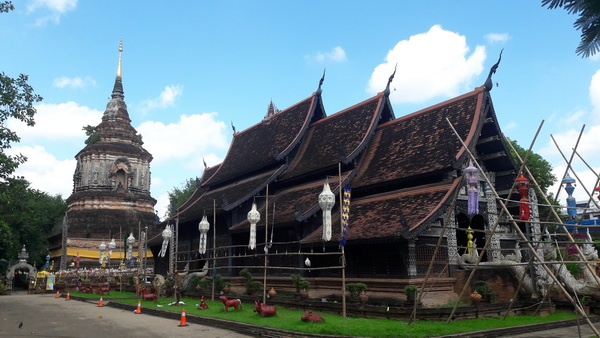
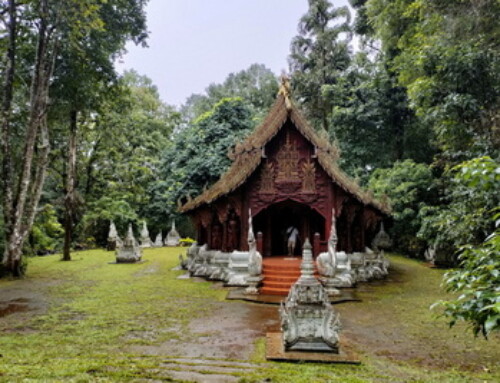
Lok Moli Temple, also known as Wat Lok Moli, is a beautiful Lanna-style temple located just outside the northern side of Chiang Mai Old City. It is known for its wooden viharn, peaceful atmosphere and impressive ancient brick chedi.
This guide explains what to see at Lok Moli Temple, its Lanna architecture, how to get there, visitor tips and how to include this temple in a private Chiang Mai city and temple tour.
Visit Lok Moli Temple with a Private Chiang Mai City Tour
Lok Moli Temple can be visited as part of a private Chiang Mai city and temple tour. This is a flexible option for travelers who want to explore important temples in Chiang Mai with a private car, driver and guide arrangement.
- Private Tour Chiang Mai City and Temple – Private group tour including Chiang Mai temples
There are many places in Chiang Mai where visitors can learn about Lanna history. You can visit museums for historical information, or explore a historic temple like Lok Moli Temple to see real Lanna architecture in person.
🏛️ A Quiet Temple with a Powerful Presence
Just beyond the northern stretch of Chiang Mai’s Old City moat, Wat Lok Moli feels like a sanctuary that the city forgot to rush. The road outside can be lively, yet the moment you step inside, the atmosphere softens—cooler air, gentler sounds, and a pace that invites you to slow down. This is not a temple that overwhelms you with crowds or constant noise. Instead, it wins you over through texture and mood: the warm tones of wood, the grounded simplicity of the courtyard, and the deep, weathered character of its most famous landmark—a towering brick chedi that seems to hold centuries in its walls.
📜 History That Reaches Deep into Lanna Chiang Mai
Lok Moli Temple is often placed among the older temple sites connected to the Lanna Kingdom, with its name appearing in historical records from the 14th century. That early mention is important because it suggests the area was already established as a religious space during Chiang Mai’s formative centuries, when monastic communities helped shape the city’s identity. Over time, the temple developed through different phases of patronage and rebuilding—common for northern Thai temples that endured political shifts, periods of decline, and later revival.
One historical storyline frequently associated with Wat Lok Moli is its connection to royal circles during the height of the Lanna era. The great chedi at the rear is often understood not only as a religious monument but also as a memorial structure linked with an important ruler. This dual meaning—spiritual and historical—gives the site a distinctive weight. You’re not just looking at “a beautiful stupa.” You’re standing before a structure that reflects how kings, faith, and city-building once intertwined in Chiang Mai.
🏛️ Lanna Architecture in Two Acts: Wood in Front, Brick Behind
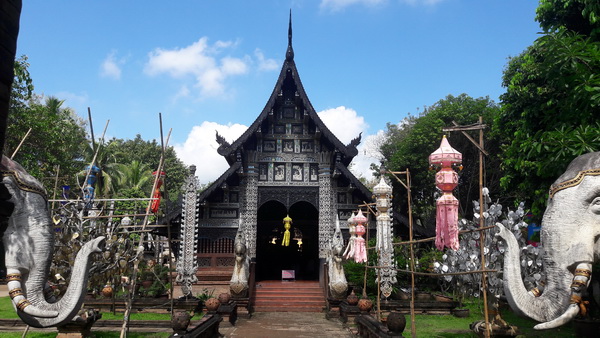
Wat Lok Moli’s layout feels almost cinematic because it reveals its highlights in a natural sequence. At the front is the viharn (assembly hall), defined by Lanna-style woodcraft and a warm, intimate character. Walk deeper into the compound and the mood shifts dramatically: the massive brick chedi rises behind the viharn like a silent monument, more rugged and ancient in its texture. This front-to-back contrast is what makes the temple so memorable.
The viharn’s design is gentle rather than flashy. Its lines are balanced, its woodwork feels human and handmade, and the interior often holds a soft darkness that encourages quiet attention. The chedi, on the other hand, is all about scale and time. The brick surface—earthy, weathered, and richly toned—creates a rare sense of authenticity. Many stupas in Thailand appear bright and newly plastered; here, the raw brick suggests age in a way you can feel immediately, even before you know anything about the temple’s history.
🪵 The Wooden Viharn: Sacred Stillness and Northern Craftsmanship
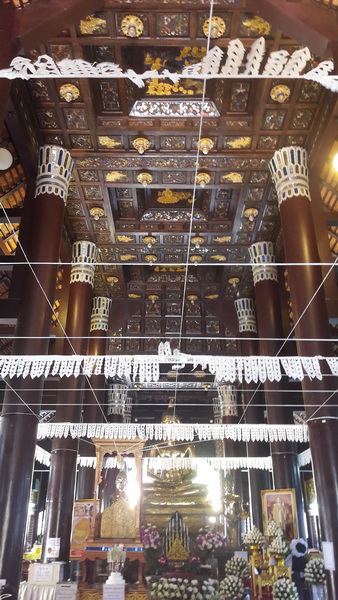
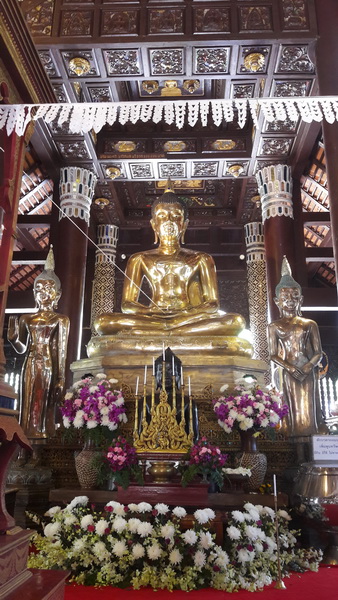
Stepping inside the viharn is like entering a quieter temperature of life. Shoes off, voices down, and your eyes begin to adjust to the dimness. The main Buddha image sits as the spiritual center—serene, dignified, and deeply calming. Visitors often pause longer than expected here because the space naturally invites reflection. It is not only a place for a quick photo; it is a place where silence feels appropriate.
Look around and you’ll notice how Lanna craftsmanship prefers harmony over excess. Carved wooden elements, structural rhythm in the pillars, and subtle decorative patterns often reward slow observation. Even if you know nothing about architecture, you’ll sense that the building is designed to soothe rather than impress. For travelers seeking a more meaningful temple moment—something quieter than the city’s busiest sites—this interior can become one of the most memorable parts of the visit.
🧱 The Grand Brick Chedi: A Landmark Built to Endure
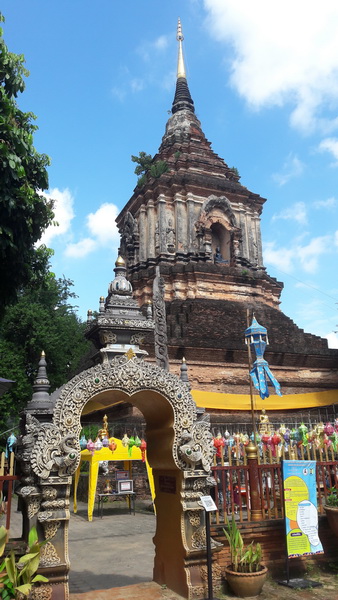
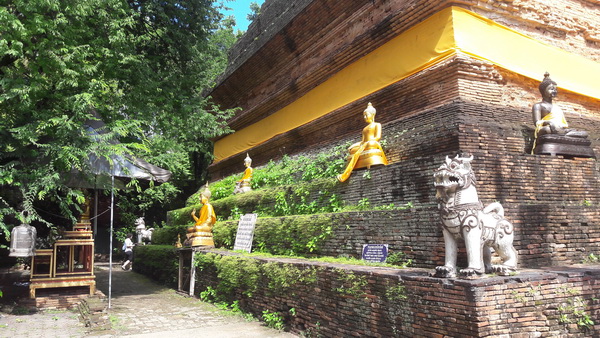
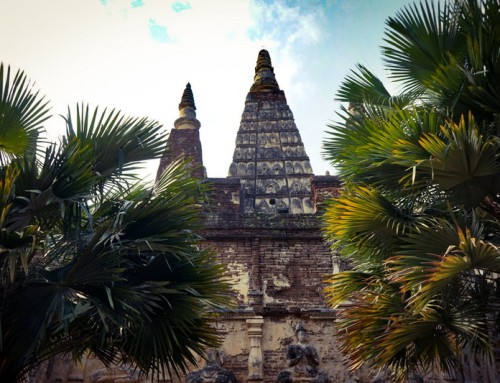
The chedi at the back of Lok Moli temple is the kind of structure that changes with the light. In the morning, its brick feels warm and approachable, with soft shadows that reveal its contours gently. Later in the day, as the sun angles lower, the brick becomes dramatic—darker planes, sharper edges, and an almost fortress-like silhouette that dominates the temple grounds. The size is impressive up close. Stand near the base and you realize the chedi isn’t merely “tall”—it is heavy with presence, like a piece of the old city’s spine still standing.
A satisfying way to experience it is to walk slowly around the base. You’ll notice how the structure anchors the entire compound, how its scale pulls your gaze upward, and how the weathered surface tells a story without words. This is where Wat Lok Moli feels most ancient, most “Lanna,” and most emotionally resonant—especially if you allow yourself a few minutes to simply look and breathe.
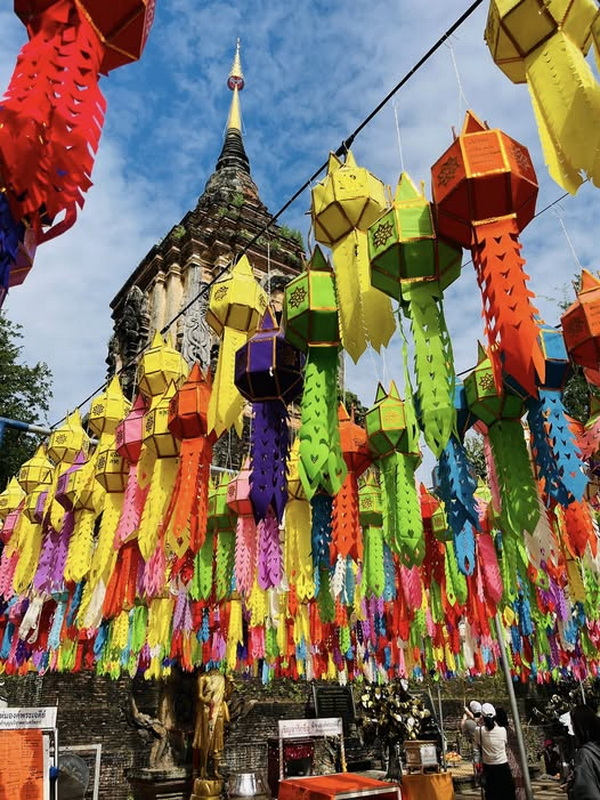
🏮 Lok Moli Temple during Yi Peng Season
Lok Moli temple becomes especially enchanting during Yi Peng season, when lanterns are hung throughout the compound and the temple transforms into a canopy of color and glow. Even if you arrive in daytime, the lanterns create a celebratory softness; but the most magical moment is at dusk, when the light begins to shift and lantern illumination takes over the atmosphere.
In northern Thai tradition, offering light carries symbolic meaning. It can be understood as a gesture of reverence and a wish for clarity, guidance, and auspicious direction—like illuminating your path forward. That’s why lantern hanging, when allowed and organized by temple practice, can feel more meaningful than decoration. You’ll see people writing names or wishes, moving carefully, and treating the lanterns as devotional objects rather than props. If you visit during this period, arrive before sunset and stay into early evening. You’ll experience two different “temples” in one visit: one shaped by natural light and heritage textures, and one shaped by glowing color and collective hope.
🪷 Faith and Belief: A Living Spiritual Landscape
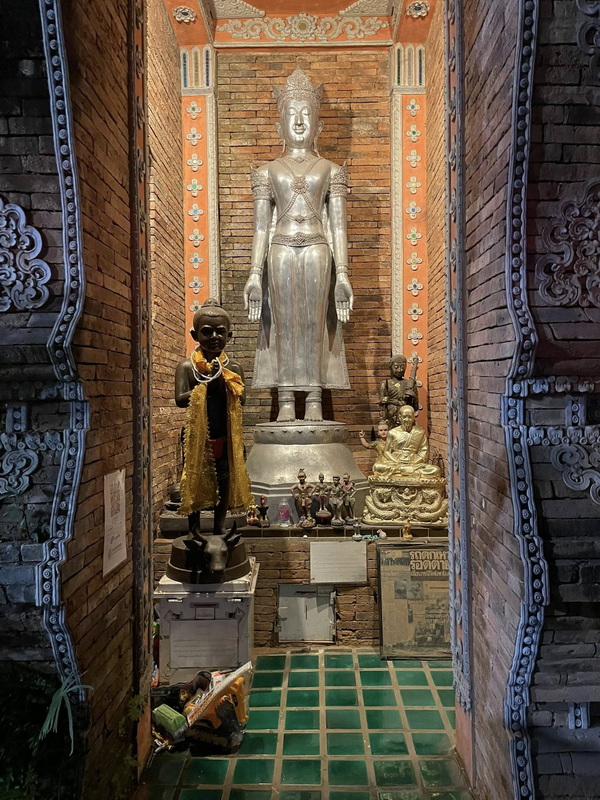
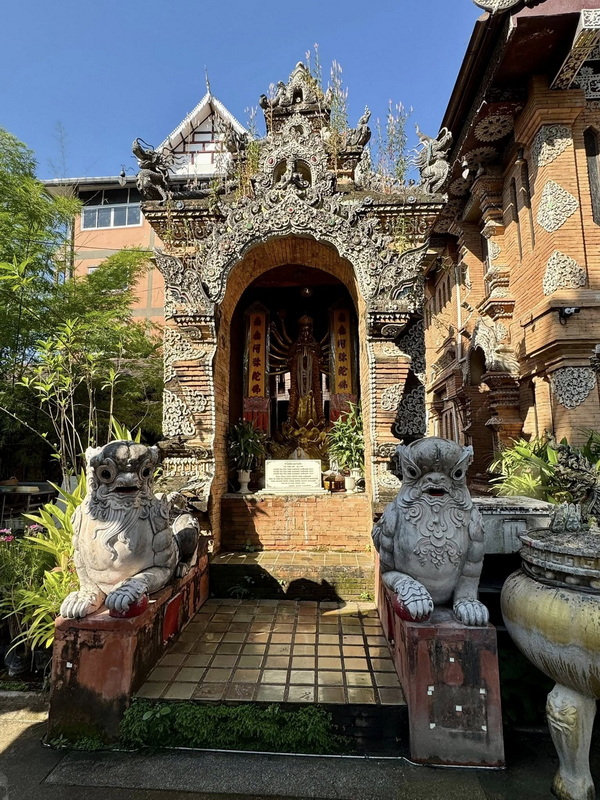
Lok Moli temple is also compelling for travelers curious about Thai devotional culture beyond textbook Buddhism. Around the grounds, you may find multiple points of worship reflecting the way Thai spiritual life often blends Buddhist practice with revered figures associated with compassion, protection, prosperity, and success. Rather than seeing this as “mixed religions,” many locals experience it as a layered spiritual ecosystem—different symbols, different intentions, all within a respectful temple environment.
If you are new to these traditions, the best approach is simple: observe, read any posted guidance, and follow the tone of the space. Keep your voice low, don’t touch sacred objects, and avoid treating shrines as purely decorative. The temple remains a place of real devotion. When you meet it on those terms, the experience becomes richer—less like sightseeing, more like understanding how belief lives in daily life.
🎯 What to Do at Wat Lok Moli: A Simple Route That Feels Complete
A great visit doesn’t require a long checklist. Start at the viharn. Step in quietly, pay respect, and allow the calm to settle. Then walk the grounds at an unhurried pace, letting your eyes catch details—woodwork, gates, small corners of shade, the way the space opens toward the back. Next, make your way to the chedi and circle it slowly. This is the temple’s “big moment,” but it works best when you don’t rush it.
If you enjoy photography, you can create a natural photo sequence: entrance and framing, viharn textures, interior mood, then the chedi’s scale. If you prefer a more reflective experience, treat the walk as a small meditation route—quiet steps, gentle attention, and a few minutes of stillness at the end. During lantern season, add a dusk visit for the full atmosphere shift. Wat Lok Moli is not demanding, but it is rewarding when you give it time.
🚶♀️ Getting There: Easy from the Old City and Nearby Neighborhoods
Lok Moli Temple is located at 229, Manee Nopparat Road, Sri Phoom District, Muang County, Chiang Mai Province.
Wat Lok Moli is located along the northern stretch of the Old City moat, making it easy to reach by walking or cycling if you’re staying inside the Old City. Songthaews and tuk-tuks can drop you nearby quickly, and the ride is short from central Chiang Mai areas such as Tha Phae Gate, Nimman, or the Night Bazaar. If you come by car, parking can be limited close to the temple, so arriving early is wise—especially during festival periods.
If you don’t have a car, you can take a red truck or Tuk Tuk instead. Just tell the driver where you want to go. But the travel fee won’t be fixed, as it should depend on the consideration of the driver or you can book the private tour with us which we will arrange tour package to see another place as well.
⏰ Opening Hours, Entrance Fee, and Visitor Etiquette
Wat Lok Moli is generally open daily from early morning to late afternoon/early evening, and entry is typically free, with donations welcomed. As with all Thai temples, dress modestly—covered shoulders, longer bottoms, and no overly revealing outfits. Remove your shoes before entering the viharn, keep your voice low, and avoid interrupting worship or ceremonies. If you visit during a festival period, follow any instructions regarding lantern areas and pathways, and treat decorations as sacred offerings rather than casual props.
Note : Wheelchair user is accessible.
Our Service for Lok Moli Temple
- Private Tour Chiang Mai City and Temple – Visit Lok Moli Temple and other important temples in Chiang Mai by private tour


Leave A Comment